
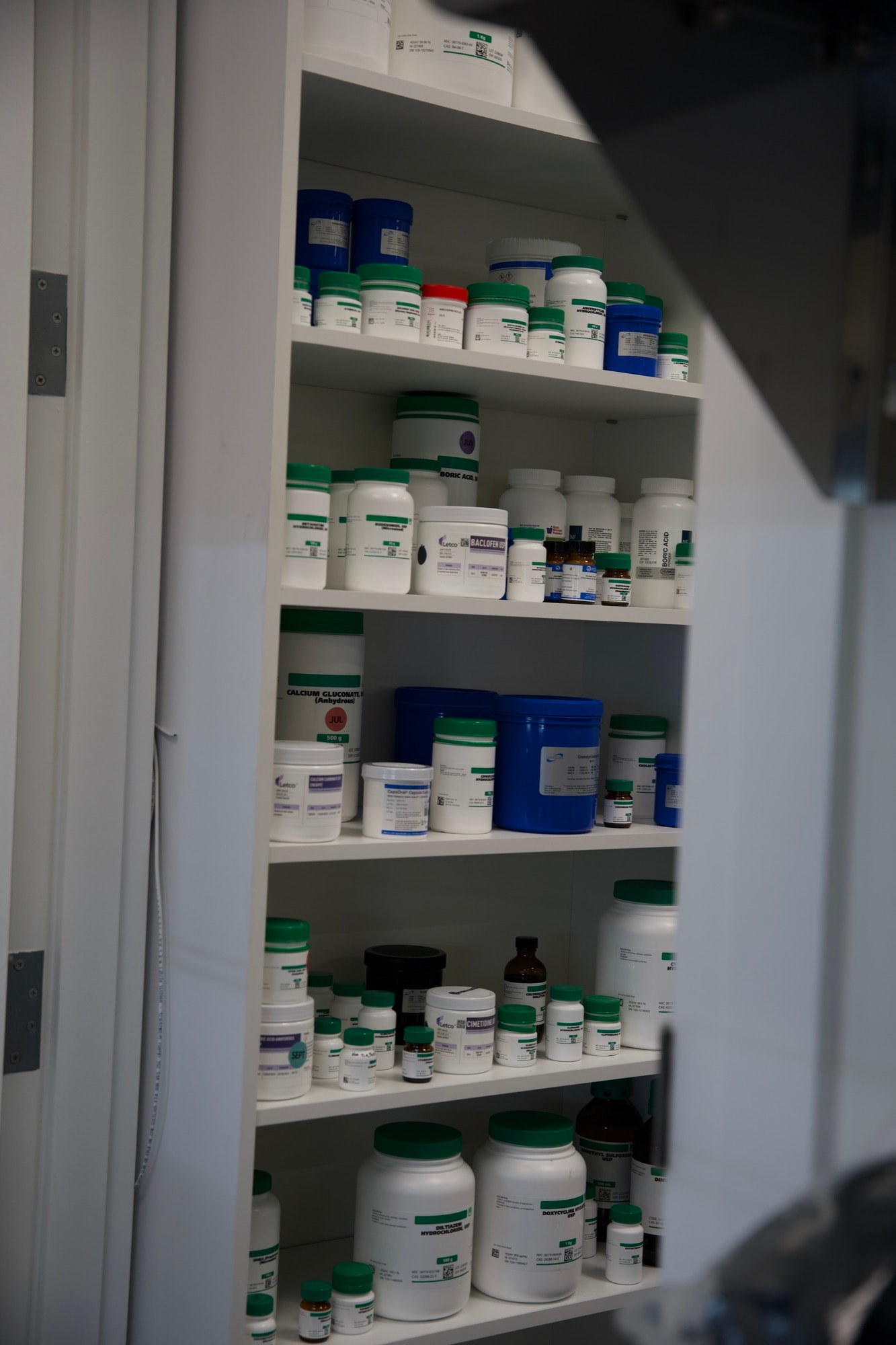
Calculating Your Dose — Units, mL, and Syringes Explained walkthrough.
Compounded medications often use different units (mg for solid, mL for liquid, 'units' on insulin syringes). Knowing how to convert between them is essential for accurate dosing.
Step by step.
- 01
Read the concentration
Every compounded liquid label has a concentration: 'mg per mL' (e.g., 200 mg/mL). This tells you how much active is in each milliliter of liquid.
- 02
Convert mg to mL
Divide your prescribed mg by the concentration. Example: a 100 mg dose at 200 mg/mL = 100/200 = 0.5 mL.
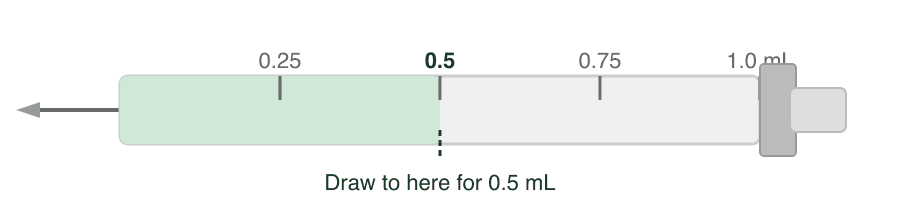
Example: drawing 0.5 mL in a 1 mL syringe (100 mg dose from a 200 mg/mL vial) - 03
Convert mL to insulin units
Insulin syringes measure in 'units' where 100 units = 1 mL on a U-100 syringe. So 0.5 mL = 50 units. Use this when your syringe is marked in units but your dose is in mL.
- 04
Use the right syringe
Insulin syringes (U-100): 1 mL = 100 units, smallest readable mark = 1 unit. Tuberculin (TB) syringes: 1 mL marked in 0.01 mL increments. Larger syringes (3 mL, 5 mL) for IM doses.
- 05
Double-check
Confirm the dose with the pharmacy or your prescriber if anything is unclear. Mistakes most often happen at concentration changes — check whenever your prescription strength changes.
Notes
- The 'units' markings on an insulin syringe describe insulin concentration (U-100), not your medication. For any non-insulin compound, the units-to-mL math depends on YOUR prescription's concentration — never assume the syringe markings translate directly. When in doubt, call us before injecting.
Resources
Have a question
right now?
Our pharmacists are happy to walk through any guide topic in real time. Phone, text, or email.